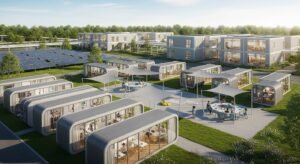
Emerging Learning Space Framework and Modern Prefabricated Education Solutions
The education sector is rapidly transforming due to rising student populations, limited infrastructure budgets, and the demand for faster construction methods. In this context, Prefab Classrooms have become a practical and widely adopted solution for schools that need immediate space expansion without long construction delays. These structures are pre-engineered off-site and then assembled at the location, making them highly efficient for both urban and rural education systems. Prefab Classrooms offer flexibility, durability, and cost-effectiveness, which makes them suitable for temporary as well as long-term academic use.
One of the major strengths of this approach is the integration of prefabricated classroom installation services, which streamline the entire process from design to deployment. These services ensure that schools can quickly set up functional learning environments without disturbing ongoing academic activities. In many regions, especially where infrastructure development is slow, such systems are becoming essential for maintaining educational continuity. The growing demand for scalable infrastructure has also introduced modern innovations such as smart layouts and lightweight materials that improve usability and comfort.
Another key aspect is the use of pods, which are compact and modular units designed for flexible learning setups. These pods are especially useful in areas where space is limited or where schools need quick expansion options. They can be installed individually or connected to form larger classroom structures depending on the requirement. Their portability and adaptability make them a preferred choice in modern education planning.
Overall, the shift toward prefab solutions reflects a broader movement toward sustainability and efficiency in education infrastructure. With increasing focus on rapid deployment, schools are now able to provide better learning environments while minimizing construction costs and time delays.
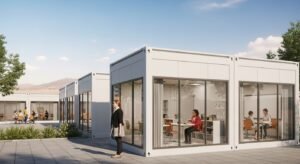
Structured Deployment Models in Educational Infrastructure
The development of modern school facilities is no longer limited to traditional brick-and-mortar construction. Instead, innovative systems such as rapid deploy school infrastructure systems are redefining how educational spaces are created and managed. These systems allow institutions to establish fully functional classrooms in a fraction of the time required for conventional buildings. rapid deploy school infrastructure systems are particularly beneficial in emergency situations, rural expansions, and rapidly growing urban areas where immediate educational space is required.
The flexibility of these systems lies in their modular design, which enables schools to scale up or down based on student enrollment. In many developing regions, authorities are adopting such models to address overcrowding and infrastructure shortages. The integration of digital planning tools and pre-engineered components ensures that the construction process remains efficient and error-free.
Another important advantage is that these systems reduce dependency on heavy construction materials, which not only lowers costs but also supports environmentally friendly building practices. Schools can also customize layouts to include science labs, digital learning zones, and collaborative spaces without major structural changes.
The concept of rapid deploy school infrastructure systems is also closely linked with disaster recovery education planning. After natural disasters, these systems provide immediate relief by restoring access to education within days instead of months. Their portability and reusability make them a long-term investment for governments and private institutions alike. By combining speed, efficiency, and sustainability, this approach is reshaping the global perspective on educational infrastructure development.
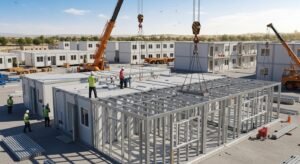
Modular Expansion and Cost-Efficient Academic Structures
As educational demands continue to rise, institutions are increasingly turning toward flexible and scalable design approaches. One of the most effective innovations in this area is cost effective modular education units, which provide schools with the ability to expand their facilities without significant financial burden. These units are designed to be assembled quickly and can be adapted to various academic purposes such as classrooms, laboratories, or administrative offices. cost effective modular education units are particularly useful in regions where funding is limited but educational demand is high.
The adaptability of these units allows for seamless integration with existing school infrastructure. They can be stacked, connected, or relocated depending on institutional requirements. This flexibility ensures that schools do not need to undergo expensive renovations or permanent construction projects whenever student numbers increase.
In addition to affordability, cost effective modular education units also contribute to better space utilization. Schools can optimize available land by using vertical or horizontal expansion strategies. These units are also designed with modern insulation and ventilation systems, ensuring a comfortable learning environment for students throughout the year.
The increasing popularity of modular systems is also driven by their low maintenance requirements. Since most components are factory-built, quality control is higher, reducing long-term repair costs. Furthermore, these systems support sustainable construction practices by minimizing waste and reducing environmental impact.
In many cases, schools combine modular units with portable structures to create hybrid learning environments that maximize efficiency. This combination allows institutions to respond quickly to changing educational needs while maintaining high standards of safety and comfort.

Adaptive Learning Environments and Structural Flexibility
Modern education requires infrastructure that can adapt to changing teaching methods, student populations, and technological advancements. In this evolving landscape, pods play a crucial role in creating flexible and efficient learning spaces. These compact units are designed for mobility and quick installation, making them ideal for temporary classrooms or supplementary learning zones. pods are increasingly being used in both urban schools and remote education centers due to their versatility.
The use of pods allows educational institutions to respond quickly to sudden increases in enrollment without investing in permanent construction. They can be easily relocated, expanded, or reconfigured depending on academic requirements. This flexibility ensures that schools maintain continuity even during infrastructure upgrades or renovations.
In addition, Prefab Classrooms provide a strong foundation for structured yet flexible educational environments. These systems are designed to meet modern safety and comfort standards while offering rapid deployment capabilities. Prefab Classrooms are also compatible with digital learning technologies, making them suitable for hybrid education models.
Another important advantage of these systems is their ability to reduce construction downtime. Schools can continue operating while additional units are being installed, ensuring uninterrupted academic activities. This makes prefab solutions highly efficient for institutions experiencing rapid growth or seasonal enrollment fluctuations.
Overall, the combination of mobile units and Prefabricated Classrooms systems is transforming how educational infrastructure is planned and executed. By prioritizing flexibility and efficiency, schools can create dynamic learning environments that adapt to future needs without requiring major structural investments.
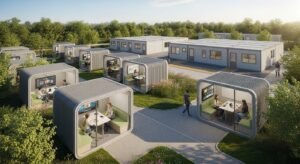
Future-Ready Educational Infrastructure and Sustainable Design Shift
The evolution of educational infrastructure is strongly influenced by sustainability, cost efficiency, and rapid deployment capabilities. In this context, the adoption of modern construction strategies is shaping the future of learning environments across the world. One of the most significant innovations supporting this transformation is the use of pods, which provide flexible, mobile, and space-efficient solutions for schools facing infrastructure challenges.
These pods are not only practical but also highly adaptable, allowing institutions to expand or modify their facilities based on changing requirements. Their ability to function as independent or connected units makes them suitable for a wide range of educational applications. From temporary classrooms to specialized learning spaces, they offer unmatched versatility in modern school planning.
At the same time, the introduction of prefabricated classroom installation services has streamlined the entire process of educational infrastructure development. These services ensure that schools can quickly deploy functional classrooms with minimal disruption and maximum efficiency. The combination of planning, manufacturing, and on-site assembly significantly reduces construction timelines and operational costs.
Another key advancement is the integration of cost effective modular education units, which continue to redefine affordability in school infrastructure. These units enable institutions to scale their facilities without heavy financial investment while maintaining high standards of safety and design. Their reusable and adaptable nature makes them a sustainable choice for long-term educational planning. The growing reliance on modular systems highlights a global shift toward efficient and environmentally responsible construction practices.
In addition, the broader concept of sustainable mobile classroom development model represents the future direction of educational infrastructure. This model focuses on creating learning environments that are not only portable and efficient but also environmentally conscious. It emphasizes reduced waste, energy efficiency, and long-term usability, making it highly relevant in today’s sustainability-driven world. Schools adopting this model benefit from reduced operational costs and improved adaptability to future educational needs.
Overall, the transformation of school infrastructure is being driven by a combination of flexibility, sustainability, and technological integration. As educational demands continue to grow, innovative solutions like pods, modular units, and prefabricated systems will play an increasingly important role in shaping the learning environments of tomorrow.