
Benefits of Modular Construction
Introduction
In today’s rapidly evolving construction industry, innovation and efficiency have become essential for successful project delivery. One of the most transformative approaches gaining popularity worldwide is Modular Construction. This modern building method involves manufacturing structures in sections or modules within a controlled factory environment and then assembling them on-site. Compared to traditional construction methods, Modular Construction offers faster completion, improved quality, and greater cost efficiency.
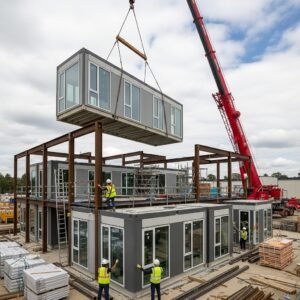
The rise of Modular Construction is closely linked with the growing demand for Portable and Prefabricated Buildings. Businesses and developers are increasingly adopting this approach because it allows them to build high-quality structures in less time while maintaining flexibility. From Prefab Buildings and Prefabricated Cabins to Prefabricated Houses and Prefabricated Villas, modular solutions are transforming how buildings are designed and constructed.
One of the key advantages of Modular Construction is its ability to reduce construction time significantly. Since building modules are manufactured in factories while site preparation occurs simultaneously, projects can be completed much faster than traditional construction. This is especially beneficial for industries that rely on quick infrastructure development, such as construction companies, industrial facilities, and commercial businesses.
Another major factor driving the popularity of Modular Construction is cost efficiency. By reducing labor costs, minimizing material waste, and shortening project timelines, this method helps businesses save money without compromising on quality. It is widely used in applications such as Portable Offices, Site Office Cabins, Container Offices, and Accommodation Cabins.
Sustainability is also an important benefit of Modular Construction. Since modules are produced in a controlled environment, there is less material waste and better resource management. This makes modular building systems more environmentally friendly compared to traditional construction methods.
In addition, Modular Construction offers flexibility and customization. Structures can be easily expanded, relocated, or modified according to changing requirements. This is particularly useful for projects involving Workers Accommodation, Portable Accommodation, and Labour Accommodation, where adaptability is essential.
Overall, Modular Construction represents the future of the building industry. With its numerous benefits, including speed, cost savings, quality control, and sustainability, it has become a preferred choice for modern infrastructure development.
What is Modular Construction?
Modular Construction is a building process in which structures are created in sections (modules) in a factory setting and then transported to the construction site for assembly. These modules are designed to fit together seamlessly, forming a complete structure.
This method is widely used in creating:
- Portable and Prefabricated Buildings
- Prefab Buildings
- Prefabricated Cabins
- Modular Buildings
- Container Offices
The factory-controlled process ensures high-quality construction and consistent results.
Key Benefits of Modular Construction
1. Faster Construction Time
One of the biggest advantages of Modular Construction is speed. Since modules are built off-site while groundwork is completed simultaneously, project timelines are significantly reduced.
This makes it ideal for projects that require quick completion, such as Site Office Cabins, Portable Offices, and emergency facilities.
2. Cost Efficiency
Modular Construction helps reduce overall project costs by:
- Lower labor expenses
- Reduced material waste
- Shorter construction timelines
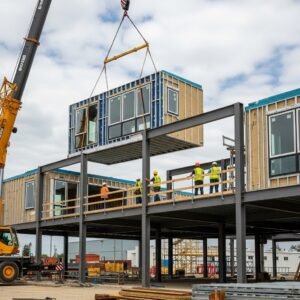
Businesses can achieve high-quality construction at a lower cost compared to traditional methods.
3. High Quality Control
Modules are manufactured in a controlled factory environment, ensuring consistent quality. Unlike traditional construction, where weather and site conditions can affect quality, Modular Construction maintains strict standards.
4. Flexibility and Scalability
Structures built using Modular Construction can be easily expanded or modified. Additional modules can be added to increase space when required.
This flexibility is especially useful for:
- Workers Accommodation
- Portable Accommodation
- Accommodation Cabins
5. Eco-Friendly Construction
Sustainability is a major benefit of Modular Construction. The factory-based process reduces waste, conserves materials, and minimizes environmental impact.
6. Improved Safety
Since most construction work takes place in a factory, the risks associated with on-site construction are significantly reduced. This leads to safer working conditions for workers.
7. Reduced Site Disruption
Traditional construction often causes noise, dust, and disruption. Modular Construction minimizes these issues because most of the work is completed off-site.
Applications of Modular Construction
Construction Industry
Many Construction Company projects use Modular Construction to build Site Offices, storage units, and temporary facilities.
Residential Buildings
Modern homes, such as Prefabricated Houses and Prefabricated Villas, are increasingly built using modular techniques.
Commercial Buildings
Businesses use Modular Buildings for offices, retail spaces, and service facilities.
Industrial Use
Factories and warehouses use modular units for administrative offices and storage.
Integration with Modern Infrastructure
Modular Construction is often combined with other systems such as:
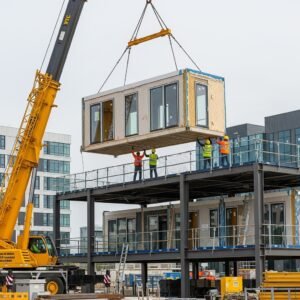
- Portable and Prefabricated Buildings
- Prefab Buildings
- Container Offices
- Portable Offices
This integration allows businesses to create complete and efficient infrastructure solutions.
Challenges of Modular Construction
Although Modular Construction offers many benefits, it also has some challenges:
- Initial design planning is critical
- Transportation of modules requires careful handling
- Limited design flexibility in some cases
However, these challenges are minor compared to the overall advantages.
Future of Modular Construction
The future of Modular Construction looks promising as more industries adopt this method. Technological advancements are improving design flexibility, material quality, and construction efficiency.
Smart modular buildings with energy-efficient systems and advanced features are becoming more common, making Modular Construction an essential part of modern infrastructure development.
Conclusion
Modular Construction is revolutionizing the building industry by offering faster, cost-effective, and sustainable construction solutions. From Portable and Prefabricated Buildings to Prefabricated Houses and Modular Buildings, this method provides flexibility and efficiency for a wide range of applications.
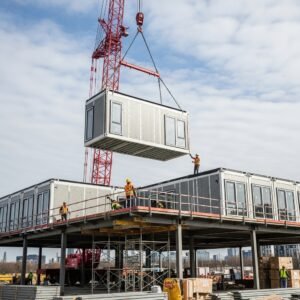
With benefits such as reduced construction time, improved quality control, and environmental sustainability, Modular Construction has become a preferred choice for businesses and developers worldwide. As technology continues to advance, modular construction will play an even greater role in shaping the future of construction and infrastructure development.
In conclusion, Modular Construction has emerged as one of the most efficient and future-ready building solutions in today’s construction industry. With increasing demand for speed, flexibility, and cost control, businesses are rapidly shifting toward Modular Construction to meet modern infrastructure needs. This approach not only reduces project timelines but also ensures high-quality outcomes through controlled manufacturing processes.
One of the most compelling reasons to adopt Modular Construction is its ability to deliver consistent results while minimizing waste and labor costs. Unlike traditional building methods, Modular Construction allows simultaneous site preparation and module fabrication, significantly accelerating project completion. This makes it an ideal choice for industries that require quick and reliable infrastructure solutions.
Additionally, Modular Construction offers unmatched flexibility. Whether it is expanding an existing structure or relocating units to a new site, this method adapts easily to changing project requirements. Many businesses are integrating Modular Construction with Portable and Prefabricated Buildings, Portable Offices, and accommodation units to create scalable and efficient work environments.
Sustainability is another major advantage of Modular Construction. By reducing material waste and optimizing resource usage, it supports environmentally responsible construction practices. As global awareness about sustainable development increases, Modular Construction is becoming a preferred choice for eco-friendly building solutions.
Furthermore, advancements in technology are continuously improving the quality and design possibilities of Modular Construction. Modern modular buildings now offer enhanced aesthetics, better insulation, and advanced features, making them comparable to traditional structures.
Overall, Modular Construction is not just a trend but a long-term solution for modern construction challenges. Its benefits in terms of speed, cost efficiency, flexibility, and sustainability make Modular Construction a smart investment for businesses looking to stay ahead in a competitive market.