Modern Shift Toward Industrial Construction Systems
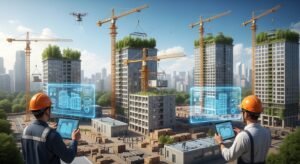
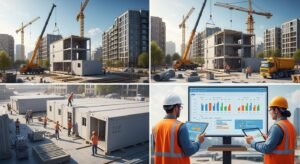
The construction industry is experiencing a major transformation as demand increases for faster, smarter, and more efficient building solutions. Among these innovations, Prefab Buildings have emerged as one of the most influential developments in modern architecture. The concept of Prefab Buildings is based on manufacturing structural components in controlled factory environments and then assembling them on-site, which significantly reduces construction time and improves quality control. This approach eliminates many traditional challenges such as weather delays, material wastage, and labor inefficiencies.
One of the most important supporting services in this sector is modular construction planning services, which ensures that every stage of the building process is carefully designed for maximum efficiency. These services help architects and developers coordinate factory production with on-site assembly, ensuring seamless execution. Additionally, modern construction systems also rely on smart prefab structural engineering solutions that enhance durability, precision, and sustainability in every project. These systems are widely used in residential, commercial, and industrial sectors due to their flexibility and scalability.
The growing popularity of Prefab Buildings is also driven by increasing urbanization, where land scarcity and population growth demand faster construction methods. Unlike traditional buildings, these systems offer consistent quality, reduced environmental impact, and improved cost efficiency. As global infrastructure needs continue to expand, Prefab Buildings are becoming a reliable long-term solution for modern development challenges.
Structural Categories and Modern Design Variations
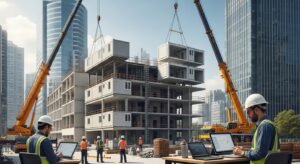
The evolution of prefabrication has led to the development of different structural types designed for various applications. One of the most widely used categories is eco friendly prefab modular housing systems for cities, which focus on sustainability and energy efficiency. These systems are particularly useful in urban environments where environmental impact and space optimization are key concerns.
Another important category is rapid installation prefab industrial building units, which are designed for warehouses, factories, and large commercial facilities. These systems allow businesses to complete infrastructure projects in significantly less time compared to traditional construction methods. The repeated use of eco friendly prefab modular housing systems for cities highlights the growing importance of green construction practices in modern architecture.
Similarly, rapid installation prefab industrial building units are widely adopted in logistics and manufacturing sectors due to their scalability and cost-effectiveness. These structures can be expanded or modified easily based on operational requirements. The flexibility of Prefab Buildings allows developers to choose from a wide range of designs, including residential homes, office spaces, and industrial complexes.
Another commonly used component in modern construction is unit based modular design, which simplifies transportation and installation while maintaining structural integrity. The combination of these categories demonstrates how prefabrication is reshaping the future of architecture.
Core Engineering Principles and Manufacturing Innovation
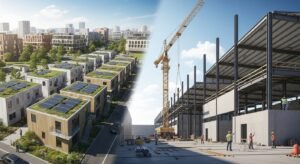
The foundation of modern prefabrication lies in advanced engineering and precision manufacturing. One of the most effective systems used today is the advanced space optimized prefab construction system, designed to maximize usable space while maintaining structural strength. The repeated application of advanced space optimized prefab construction system ensures consistency and reliability across large-scale development projects.
Another widely adopted innovation is high efficiency factory built modular structure design, which focuses on producing complete building components in controlled environments. This method ensures that each unit meets strict quality standards before being transported to the construction site. The use of unit based systems allows developers to streamline logistics and reduce on-site construction complexity.
Developers prefer Prefab Buildings because they significantly reduce human error, material waste, and construction delays. Every component is pre-engineered, tested, and verified before installation, ensuring a higher level of accuracy compared to traditional methods. The repeated use of Prefab Buildings in large infrastructure projects reflects their reliability and growing global acceptance.
Additionally, automation and digital modeling technologies such as BIM (Building Information Modeling) are increasingly integrated into prefabrication processes, improving coordination between design and execution phases.
Economic Advantages and Practical Benefits in Construction
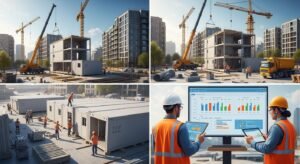
One of the strongest reasons behind the popularity of modern prefabrication is cost efficiency. The use of Prefab Buildings significantly reduces overall project expenses by minimizing labor costs, material waste, and construction delays. The repeated use of Prefab Buildings across residential and commercial developments highlights their economic value and efficiency.
A major supporting solution in this industry is fast deploy modular construction installation services, which allows developers to complete projects within strict timelines. This is especially beneficial for commercial complexes, hospitals, and housing societies where time is a critical factor. The use of unit systems further improves efficiency by standardizing production and reducing installation errors.
Another key advantage is reduced dependency on skilled labor, which helps control project budgets and improves scalability. Maintenance costs are also lower because prefabricated components are manufactured under controlled conditions, ensuring long-term durability.
The increasing adoption of Prefab Buildings shows a clear shift toward industrialized construction methods that prioritize affordability, speed, and sustainability. These systems are particularly effective in large-scale infrastructure projects where efficiency directly impacts profitability.
Urban Development and Space Optimization Solutions
Rapid urbanization has created a strong demand for efficient construction systems that maximize space utilization. The integration of unit based modular systems allows developers to design compact and highly functional structures suitable for modern cities. These systems are widely used in high-rise apartments, student housing, and commercial buildings.
The use of Prefab Buildings plays a crucial role in solving urban housing shortages by enabling faster project completion and reducing construction complexity. The repeated implementation of Prefab Buildings in metropolitan areas demonstrates their importance in modern urban planning.
Developers are also focusing on flexible architectural designs that allow future expansion without major reconstruction. This adaptability ensures long-term usability and value. The combination of modular engineering and prefabrication technology has transformed how cities are built, making infrastructure development faster, cleaner, and more sustainable.
Sustainability and Environmental Impact in Modern Construction
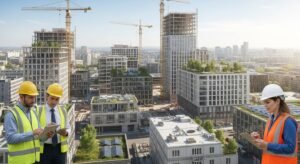
Sustainability has become a central focus in modern construction practices. The use of Prefab Buildings significantly reduces environmental impact by minimizing material waste and optimizing resource usage. The repeated use of Prefab Buildings supports global efforts toward eco-friendly construction and carbon reduction.
Another important concept is green modular construction planning services, which focus on designing energy-efficient and environmentally responsible buildings. These services help integrate renewable materials, energy-saving systems, and sustainable building practices into modern infrastructure.
The use of unit based systems also contributes to sustainability by reducing on-site pollution and construction debris. Prefabricated components are manufactured with precision, ensuring minimal waste during production.
As environmental regulations become stricter worldwide, prefabrication is expected to play an even more important role in achieving sustainable development goals.
Future Growth and Technological Advancements
The future of construction is closely linked to automation, artificial intelligence, and smart building technologies. The continued use of Prefab Buildings reflects how the industry is moving toward intelligent, scalable, and efficient construction systems. These buildings are now being integrated with smart energy management systems, automated maintenance tools, and digital monitoring technologies.
The repeated use of Prefab Buildings ensures standardization and quality consistency across large-scale developments. The combination of unit, modular construction planning services, and high efficiency factory built modular structure design is revolutionizing the global construction industry.
As technology advances, prefabrication will become even more customizable and widely adopted across residential, commercial, and industrial sectors. Developers are investing heavily in innovation to improve durability, reduce costs, and enhance sustainability.
Final Industry Perspective and Long-Term Outlook
In conclusion, modern construction is undergoing a massive transformation driven by efficiency, sustainability, and technological innovation. The use of unit systems has improved construction speed and simplified project execution across multiple sectors. The integration of modular construction planning services and high efficiency factory built modular structure design highlights how engineering advancements are reshaping traditional building practices.
Most importantly, the growing reliance on Prefab Buildings demonstrates a global shift toward faster, smarter, and more sustainable infrastructure development. With continuous advancements in technology and design, Prefab Buildings are set to become a standard solution for residential, commercial, and industrial construction worldwide, offering long-term benefits in cost, efficiency, and environmental responsibility.