Revolutionizing Interiors with Prefabrication
Spatial layout and functionality have been redefined by prefabricated interiors, which range from individual components to fully integrated systems. Portacabin manufacturers increasingly rely on interior systems theory, grounded in systems thinking, to integrate diverse concepts such as topophilia (the affective bond with place), cybernetics (feedback-driven adaptability), emotional design theory (user-centered emotional resonance), and general systems theory (holistic interconnections). This multidisciplinary framework enables the creation of prefabricated interior environments that are not only flexible but also deeply engaging, responding dynamically to users’ needs and lifestyles.
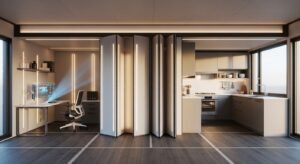
In essence, prefabrication shifts traditional construction from labor-intensive, site-specific builds to efficient, factory-controlled processes. This evolution minimizes on-site disruptions, reduces material waste, and accelerates timelines—key advantages in today’s fast-paced world. For instance, modular walls can be reconfigured like puzzle pieces, allowing spaces to morph from home offices to entertainment areas without demolition.
A Historical Journey Through Prefabrication
Prefabrication has profoundly revolutionized the building industry since its early days. Pioneering architects and designers, from Buckminster Fuller with his geodesic domes to Jean Prouvé’s modular metal houses, have continually expanded its possibilities. A standout example is the Lustron House of the 1940s—a fully prefabricated, enameled-steel home designed for post-WWII America. These homes arrived on-site in sections, assembled in days, and featured innovative interiors like built-in kitchens that epitomized the fusion of form and function.
Fast-forward to today, prefabricated interior design encompasses a vast spectrum: from soft, fabric-based partitions to immersive digital environments powered by IoT sensors. This breadth influences architectural language, moving away from rigid typologies toward fluid, hybrid forms. Kitchens and bathrooms have emerged as frontrunners for prefabrication, benefiting from advanced techniques like 3D-printed fixtures and water-recycling systems. These innovations promote environmentally friendly design and manufacturing, slashing energy use by up to 30% compared to conventional methods, according to industry reports from organizations like the World Green Building Council.
Modular Innovations in Living Spaces
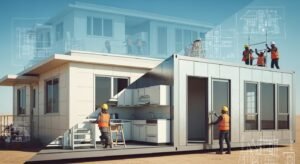
Techniques like unit construction (pre-assembled modules), modular building (stackable blocks), and screen systems (movable dividers) have unlocked truly adaptable living spaces. Imagine starting with traditional Japanese tatami mats—modular floor panels that redefine room sizes on demand—and scaling up to high-tech contemporary kitchens with plug-and-play appliances. Portacabin manufacturers have propelled this forward, extending prefabricated units beyond residential interiors into mass-produced automotive environments, such as customizable RV cabins or truck sleeper compartments.
This progression reflects a broader trend: the productization of interior environments. Spaces are now standardized for plug-and-play use across industries, from hospitality (pop-up hotels) to healthcare (mobile clinics). Benefits include scalability—add units as needs grow—and portability, ideal for disaster relief or remote workforces. Moreover, these systems standardize quality control in factories, ensuring consistency that on-site builds often lack.
The Future of Prefabricated Design
Prefabricated interior components stand out for their efficiency, precision, and forward-thinking appeal. They resonate with the public by democratizing high-quality design, once reserved for elites, and fuel breakthroughs in prefabrication technology like robotic assembly and AI-optimized layouts. Crucially, they champion sustainability: modular designs facilitate disassembly and reuse, cutting waste by 90% in some cases, per studies from the Circular Economy Foundation.
Technology innovations—such as BIM (Building Information Modeling) software and smart materials—and escalating sustainability concerns propel this field’s continuous evolution. The result? A transformed built environment where user experiences are enhanced through intuitive, responsive spaces that prioritize well-being, productivity, and eco-responsibility.
Leading Portacabin Manufacturers in the UAE
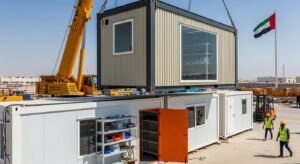
In the UAE’s dynamic construction landscape, Prefabhouse emerges as a premier name among Portacabin manufacturers in Dubai. We specialize in premium, adjustable porta cabins tailored for residential, commercial, and construction applications. Our robust portable cabins are engineered to thrive in challenging site conditions, backed by proven expertise across Dubai, Sharjah, and UAE-wide projects. Crafted from high-grade, corrosion-resistant materials, they promise swift installation—often in under 24 hours—while prioritizing comfort, safety, and longevity.
Versatility defines our offerings: from event cabins for festivals to secure storage units, on-site job offices, and labor housing. Unlike flimsy alternatives, our mobile solutions deliver uncompromising quality, with features like insulated walls, solar-ready roofing, and customizable layouts. Contact our expert team today for a rapid, competitive quote—whether you’re in Dubai or anywhere in the UAE, we make procurement seamless.
Our Comprehensive Prefabricated Product Range
Portacabin Houses: Permanent or temporary housing with customizable designs for modern comfort, durability, and elegance—perfect for families or workforce accommodations.
Commercial Portacabins: Professionally crafted for retail outlets, warehouses, and offices, boosting business efficiency with plug-and-play utilities.
Site Evaluation Services: Our dedicated team assesses your needs, recommending optimal prefabricated solutions from layout to logistics.
Pre-Built Container Rooms: Affordable, eco-friendly mobile homes that eliminate construction waste and slash labor costs by 50%.
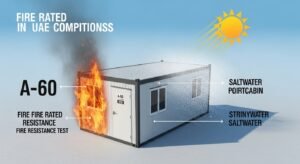
Fire-Rated Containers (A-60 Rated): Essential for offshore ops, these withstand 60 minutes of fire, saltwater corrosion, and extreme temperatures—vital for oil rigs and marine sites.
Shelved Storage Containers: Rack-integrated units solve warehouse chaos, maximizing space in industrial settings across the UAE.
Portacabins embody a contemporary, flexible lifestyle, complete with essential amenities for short- or long-term residency. Secure yours with modest upkeep and exquisite design.
Why Choose Prefabhouse: Benefits and Case Studies
As leading Portacabin manufacturers, Prefabhouse excels in innovation, affordability, and unwavering client support throughout the UAE. Our solutions surpass industry benchmarks, offering scalability that adapts to project growth—from single units to full camps. Consider a recent case: A Sharjah construction firm deployed 50 of our labor housing portacabins, cutting setup time by 70% and costs by 40%, enabling on-schedule project completion amid labor shortages.
Key advantages include rapid deployment (factory-to-site in days), cost savings (20-50% less than traditional builds), and eco-credentials (recyclable materials, low carbon footprint). Compared to stick-built structures, portacabins resist UAE’s harsh climate—sandstorms, heatwaves—while integrating smart tech like climate control and security systems. Clients rave about our after-sales service, including maintenance packages and relocation options.
Partner with Us for Your Next Project
Ready to elevate your projects? Prefabhouse combines cutting-edge manufacturing with personalized service to deliver portacabins that stand the test of time. From initial consultation to final handover, we streamline every step, ensuring compliance with UAE regulations like civil defense standards. Don’t settle for temporary fixes—invest in durable, future-proof solutions. Get your free, no-obligation quote today and discover why we’re the go-to for portacabin excellence in Dubai and beyond. Transform your vision into reality with Prefabhouse—the UAE’s trusted partner in prefabricated innovation.