Prefabricated Retail Buildings – A Smart Solution for Modern Commercial Spaces
Prefabricated Retail Buildings are rapidly becoming a preferred choice for businesses that need fast, flexible, and cost-effective commercial spaces. In today’s competitive market, traditional construction methods often lead to long delays, high labour costs, and operational disruptions. This is where portable and prefabricated buildings provide a practical alternative for retail development.
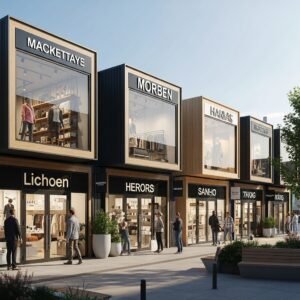
From small kiosks and food outlets to large showrooms and branded retail stores, prefab buildings allow businesses to launch operations quickly without compromising quality or durability. These buildings are manufactured off-site, transported efficiently, and installed in a controlled manner, making them ideal for fast-growing markets such as the UAE.
What Are Prefabricated Retail Buildings?
Prefabricated Retail Buildings are commercial structures built using factory-manufactured components that are assembled on-site. Unlike conventional construction, most of the work is completed in a controlled environment, ensuring better quality control and faster delivery.
These buildings can be developed using:
-
Prefab house technology
-
Modular prefab systems
-
Containerized units
-
Flat pack containers
-
Light steel structure systems
Retail businesses often choose prefabricated and portable buildings because they can be customised, relocated, expanded, or even refurbished when required.
Why Retail Businesses Prefer Prefabricated Construction
Retail projects demand speed, visibility, and cost control. Prefabricated retail buildings offer several advantages that traditional construction cannot easily match.
Faster Time to Market
Retail success depends heavily on timing. With prefab buildings, stores can be operational in weeks instead of months. This speed allows brands to capitalise on seasonal demand and high-traffic opportunities.
Cost Efficiency
Using portable houses, container buildings, or portacabin UAE solutions significantly reduces labour and material costs. Factory production minimises waste and ensures predictable pricing.
Flexibility and Mobility
Retailers can relocate or expand using portable retail buildings, modified containers, or portable cabins. This is especially useful for pop-up stores, exhibitions, and temporary retail outlets.
Types of Prefabricated Retail Buildings
Different retail models require different building solutions. Below are the most common types used in the UAE and similar markets.
Container-Based Retail Buildings
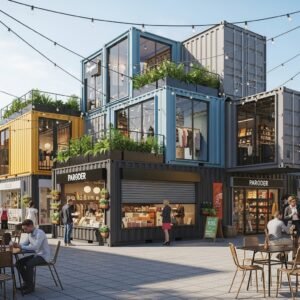
Retail spaces built using containers, used containers, or container conversion techniques are popular for food outlets, coffee shops, and branded kiosks.
Common applications include:
-
Food truck units
-
Container food truck concepts
-
Food kiosks
-
Retail container offices
These containerised units are durable, weather-resistant, and visually appealing when designed properly.
Portacabins and Modular Retail Units
Portacabins, office cabins, and site office cabins are widely used for semi-permanent retail operations. These structures are easy to install and can be customised with branding, insulation, and glass façades.
Retailers often use:
-
Prefab cabins
-
Double-store portacabins
-
Double-storey cabins
-
Aluminium cladded cabins
These are ideal for showrooms, service centres, and customer support offices.
Portable and Prefabricated Buildings for Rent
Many businesses prefer portable and prefabricated buildings for rent instead of ownership. This approach reduces capital investment while allowing operational flexibility.
Rental options include:
-
Portable cabin rental
-
Prefab house rental
-
Modified container rental
-
Portable offices
-
Site office containers
Rental retail spaces are perfect for temporary projects, seasonal stores, and trial market entry.
Design Flexibility in Prefabricated Retail Buildings
One major advantage of prefabricated buildings is their design adaptability. Retail structures can be developed to match brand identity and customer experience.
Design features include:
-
Glass storefronts
-
Curve glass cabins
-
Open layouts
-
Integrated lighting
-
HVAC systems
-
Fire-rated materials
Advanced options such as fire-rated cabins, steel structures, and precast building components ensure safety and regulatory compliance.
Customisation Options for Retail Prefab Buildings
Retailers can customise prefabricated retail buildings in multiple ways:
-
Exterior branding and cladding
-
Interior shelving and counters
-
Modular cabinet installations
-
Electrical and plumbing integration
-
Restroom additions using prefabricated modular bathrooms
-
Staff areas and storage containers
These options help businesses create fully functional retail environments without lengthy construction cycles.
Use of Portable Facilities in Retail Buildings
Modern retail projects often require additional facilities such as restrooms, staff accommodation, and service areas. Prefabrication makes it easy to integrate these elements.
Common additions include:
-
Portable toilets
-
Prefab portable toilets
-
Public prefab washroom
-
Prefab public restroom
-
Portable restrooms
-
Assembled portable restroom
-
GRP portable toilets
These facilities meet hygiene standards and can be installed quickly.
Retail Applications Across Different Industries
Prefabricated retail buildings serve a wide range of industries:
-
Food & beverage outlets
-
Supermarkets and mini marts
-
Electronics and mobile shops
-
Fashion retail
-
Automotive showrooms
-
Farm shops using prefab farm houses
-
Seasonal retail events
Retailers also combine prefab houses, portable houses, and modular buildings to create complete commercial hubs.
Sustainability and Environmental Benefits
Sustainability is a growing concern in commercial development. Prefabricated retail buildings support eco-friendly practices by:
-
Reducing construction waste
-
Lowering carbon emissions
-
Allowing reuse through refurbished prefab and refurbished containers
-
Supporting biodegradable containers
-
Improving energy efficiency
These benefits align with modern green building standards and urban development goals.
Compliance, Safety, and Approvals
Retail buildings must meet local safety and legal requirements. Professional prefab suppliers ensure:
-
Civil defense approvals
-
Fire safety compliance
-
Structural stability
-
Electrical and plumbing standards
Using fire-rated portacabins, precast building systems, and approved steel structures minimises regulatory risks.
Challenges to Avoid in Prefabricated Retail Projects
While prefabricated retail buildings offer many advantages, poor planning can create issues.
Common mistakes include:
-
Choosing low-quality materials
-
Ignoring insulation needs
-
Poor site preparation
-
Inexperienced installers
-
Lack of future expansion planning
Working with experienced portacabin manufacturers and modular construction specialists helps avoid these problems.
Cost Structure of Prefabricated Retail Buildings
Understanding cost is essential when planning prefabricated retail buildings. One of the biggest advantages of prefab buildings is predictable pricing compared to traditional construction, where budgets often exceed initial estimates.
The total cost depends on several factors:
-
Size and layout of the retail space
-
Type of structure (portable house, container building, or modular building)
-
Level of customisation and interior finishes
-
Use of precast building components or a light steel structure
-
Electrical, plumbing, and HVAC requirements
-
Installation timeline and site conditions
Retailers using portable and prefabricated buildings benefit from reduced labour costs, shorter construction time, and minimal material wastage.
Prefab Retail Buildings vs Traditional Retail Construction
Comparing traditional construction with prefabricated retail buildings highlights why many businesses are shifting to modular solutions.
Traditional Construction Challenges
-
Long project timelines
-
High labor dependency
-
Weather-related delays
-
Multiple contractors coordination
-
Higher long-term maintenance
Prefab Retail Building Advantages
-
Faster project delivery
-
Factory-controlled quality
-
Reduced on-site disruption
-
Easy expansion and relocation
-
Lower lifecycle costs
For businesses operating in competitive retail markets, prefabricated offers speed and flexibility that traditional construction struggles to provide.
Rental vs Purchase: What Is Better for Retailers?
Many retailers hesitate between buying and renting prefabricated retail buildings. Both options serve different business needs.
Prefab Rental Solutions
Rental options include:
-
Prefab house rental
-
Portable cabin rental
-
Portable and prefabricated buildings for rent
-
Modified container rental
-
Renting prefab houses
These solutions are ideal for:
-
Seasonal retail outlets
-
Pop-up shops
-
Temporary exhibitions
-
Market testing locations

Buying Prefab Retail Buildings
Purchasing is better for:
-
Long-term retail operations
-
Branded stores
-
Permanent commercial hubs
-
Retail chains planning expansion
Buying allows full customisation, long-term cost savings, and asset ownership.
Advanced Modular Designs for Retail Spaces
Modern prefabricated retail buildings are no longer basic boxes. With advanced design and engineering, retailers can create premium customer experiences.
Luxury Retail & Showrooms
Retailers use:
-
Prefabricated luxury villa concepts adapted for showrooms
-
High-end interior finishes
-
Glass façades
-
Smart lighting systems
Multi-Storey Retail Units
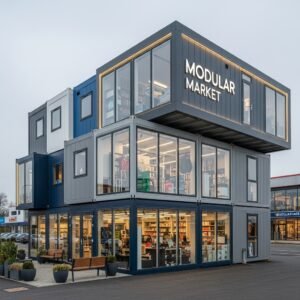
Using double-storey portacabins and double-storey cabins, retailers can:
-
Maximize space
-
Separate retail and storage areas
-
Create staff offices on upper floors.
Flat Pack Retail Solutions
Flat pack houses and flat pack containers are ideal for:
-
Remote retail locations
-
Quick installations
-
Cost-sensitive projects
Integration of Supporting Prefab Structures
Retail buildings often require additional structures to function efficiently. Prefabrication allows seamless integration of these units.
Site Offices and Administration
Retail projects commonly use:
-
Site office
-
Site offices
-
Site office cabins
-
Site office containers
-
Office containers
-
Office cabins
These structures support retail management, inventory control, and staff operations.
Security Solutions for Retail Buildings
Security is critical for retail businesses. Prefabrication offers specialised security units such as:
-
Security booths
-
Security cabins
-
Portable security cabins
-
Security portable cabins
-
VIP security cabins
-
Executive security cabins
-
Aluminium security cabins
-
Aluminium cladded security cabins.
These units provide controlled access points and can be relocated as needed.
Retail Staff Accommodation & Support Units
Large retail projects often require staff accommodation. Prefabricated and portable buildings make this easy and compliant.
Common solutions include:
-
Portable accommodation
-
Container accommodation
-
Accommodation cabins
-
Workers accommodation
-
Labour accommodation
-
Staff accommodation
-
Portable labor accommodation
-
Labor camp cabins
-
Labor camps
For retail projects linked to construction or remote locations, prefabricated labour camps are cost-effective and fast to deploy.
Sanitation & Public Facilities for Retail Areas
Customer comfort plays a major role in retail success. Prefab sanitation units ensure hygiene and convenience.
Popular options include:
-
Prefab public restroom
-
Public prefab washroom
-
Portable toilets
-
Portable toilet rental
-
Portable toilet cabins
-
GRP portable toilets
-
Container toilets
-
Prefab ablution units
-
Ablution units hire
-
Ablution unit
-
Ablution toilets
Retail centres near highways, outdoor markets, and event venues benefit greatly from these facilities.
Specialised Retail Structures
Prefabrication allows the creation of specialised retail units tailored to cultural and functional needs.
Majlis Retail & Cultural Spaces
Retailers and hospitality businesses often integrate:
-
Prefab Majlis
-
Majlis cabins
-
Arabic Majlis
-
Modern Majlis
-
Majlis fabrication
-
Majlis making
-
Arabic Majlis rental
-
Portable prefab masjids
-
Prefab masjids
These structures are common in cultural retail hubs and community markets.
Food Retail & Mobile Business Solutions
Food retail is one of the biggest users of prefabricated retail buildings.
Common solutions include:
-
Food truck
-
Container food truck
-
Kitchen caravans
-
Caravan suppliers
-
Caravan rental
-
Caravan toilets
-
Kitchen container plus office
These units allow food businesses to operate quickly with full mobility and compliance.
Renovation, Refurbishment & Relocation
Retail trends change fast. Prefabrication supports:
-
Prefab renovation
-
Refurbished prefab
-
Refurbished portacabins
-
Refurbished containers
-
Refurbished caravans
-
Refurbished portable cabins
-
Shifting of prefab houses
-
Container maintenance and repair
This flexibility allows retailers to update branding, move locations, or expand operations without starting from scratch.
Durability & Structural Strength
Retail buildings must withstand heavy foot traffic and environmental conditions. Prefab solutions use:
-
Steel structures
-
Structural steel products
-
Modified steel containers
-
Precast building systems
-
Fire-rated cabins
-
Fire-rated portacabins
These materials ensure long-term durability and safety.
Why Prefabricated Retail Buildings Are Ideal for the UAE
In regions like the UAE, extreme temperatures and fast development cycles make prefabricated retail buildings especially suitable. Factory-built components reduce exposure to harsh weather and ensure precise installation.
With turnkey projects, businesses receive:
-
Design
-
Manufacturing
-
Transportation
-
Installation
-
Final handover
All under one coordinated process.
Turnkey Prefabricated Retail Building Projects
One of the biggest advantages of prefabricated retail buildings is the availability of complete turnkey projects. In a turnkey model, the client receives an end-to-end solution, eliminating the need to manage multiple contractors.
A typical turnkey retail project includes:
-
Concept design and planning
-
Engineering and approvals
-
Manufacturing of prefab buildings
-
Transportation and on-site installation
-
Electrical, plumbing, HVAC integration
-
Final finishing and handover
This approach reduces risk, improves accountability, and ensures faster delivery for retail businesses.
Role of Modular Construction in Retail Expansion
Modular construction allows retailers to expand operations without shutting down existing stores. Additional modular buildings, prefab cabins, or containerised units can be attached or installed nearby with minimal disruption.
Retail chains often use:
-
Modular building structures
-
Buildings portable and prefabricated
-
Portable and prefabricated buildings
-
Container building solutions
This modular approach supports rapid brand expansion across multiple locations.
Maintenance & Lifecycle Value of Prefabricated Retail Buildings
Long-term maintenance is a major concern for retail investors. Prefabricated retail buildings are designed for durability and easy upkeep.
Maintenance advantages include:
-
Replaceable panels and components
-
Easy access to wiring and plumbing
-
Lower structural wear compared to traditional buildings
-
Simple upgrades using prefab renovation methods
Retailers can also extend building life through:
-
Refurbished prefab
-
Refurbished containers
-
Refurbished portacabins
-
Container maintenance and repair
These options significantly reduce lifecycle costs.
Portacabin Manufacturers & Quality Standards
Choosing experienced portable cabin manufacturers is critical for retail success. Quality manufacturers ensure:
-
Proper insulation for extreme climates
-
Use of fire-rated portacabins
-
Compliance with civil defense approvals
-
Structural integrity using steel structures
Poor-quality prefab solutions may lead to operational issues, which is why certified suppliers are essential.
Utilities, Storage & Supporting Retail Infrastructure
Retail operations require storage and utilities. Prefabrication makes it easy to add:
-
Storage containers
-
Flat packs
-
Flat pack cabins
-
Container lease and rental
-
Used containers
-
Container portacabins
These units support inventory management, back-of-house operations, and logistics.
Retail Projects in Remote & Industrial Areas
For retail projects near construction zones, farms, or industrial areas, prefabrication is the most practical option.
Common applications include:
-
Prefab farm houses
-
Farm houses
-
Portable offices
-
Site offices
-
Labour camp office
-
Labour camp requirements
-
Labour camp
Retailers serving workers and staff benefit from integrated portable labour accommodation and container accommodation units.
Specialised Retail Units & Community Facilities
Retail developments often include community or service units. Prefabricated options include:
-
Prefab classrooms
-
Portable clinics
-
Mobile clinic
-
Prefab masjids
-
Portable prefab masjids
-
Majlis block construction services
These additions enhance customer experience and meet social infrastructure needs.
Safety, Fire Protection & Structural Compliance
Retail safety is non-negotiable. Prefabricated buildings meet strict standards using:
-
Fire-rated cabins
-
Fire-rated portacabins
-
Precast building systems
-
Structural steel products
-
Light steel structure
These systems ensure safety for customers, staff, and assets.
Future of Prefabricated Retail Buildings
The future of prefabricated retail buildings is driven by speed, sustainability, and smart design.
Key trends include:
-
Smart modular retail spaces
-
Solar-integrated prefab structures
-
Solar car parking solutions
-
Sustainable materials and energy efficiency
-
Digital monitoring and smart systems
As cities grow, portable and prefabricated buildings will become essential for flexible retail development.
Buyer Decision Checklist
Before choosing prefabricated retail buildings, buyers should consider:
-
Is rental or purchase more suitable?
-
Does the supplier offer turnkey services?
-
Are materials fire-rated and approved?
-
Can the building be expanded or relocated?
-
Is refurbishment possible in the future?
Asking these questions ensures long-term success.
Final Conclusion – Why Prefabricated Retail Buildings Are the Smart Choice
Prefabricated retail buildings offer unmatched speed, flexibility, and cost efficiency for modern businesses. From container offices and food kiosks to luxury retail showrooms and community markets, prefabrication supports every retail model. With modular design, sustainable materials, and turnkey execution, businesses can launch faster, expand smarter, and adapt to changing market demands. When developed by experienced professionals, prefabricated retail buildings provide durable, compliant, and future-ready commercial spaces—making them an ideal solution for retailers aiming to stay competitive in today’s evolving commercial landscape.